

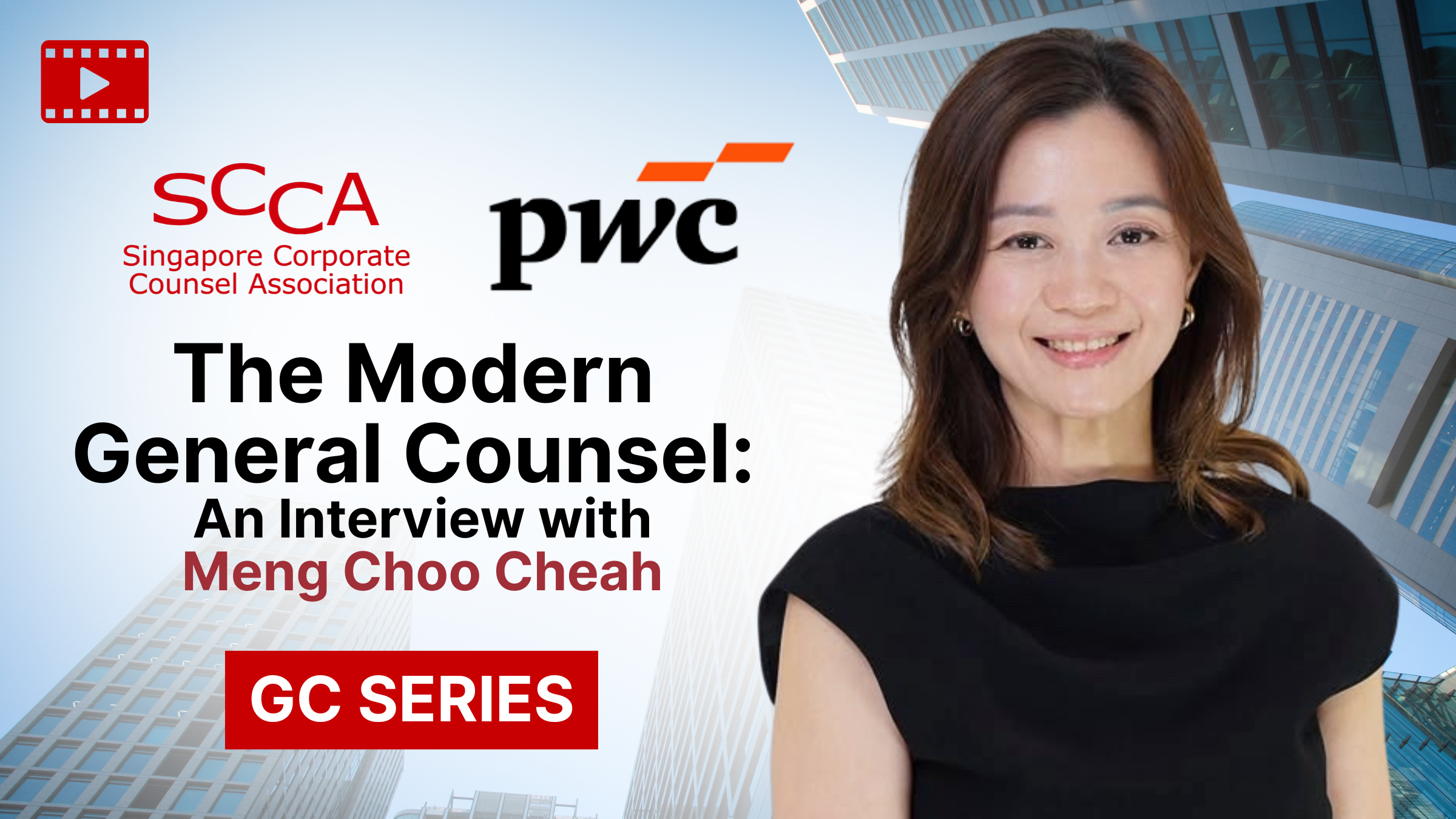
The Modern General Counsel: An Interview with Meng Choo Cheah
General Counsel as a Strategic Business Partner
At Dyson, Meng Choo Cheah sees the General Counsel (GC) role as something far larger than legal support alone. When she first moved in-house, the GC role was still largely viewed as a legal adviser and risk manager. Today, that role has evolved into a true strategic business partner.
That shift reflects a broader change in what businesses now expect from their legal leaders. For Cheah, the role of a legal leader encompasses more than a legal problem solver, it includes being a commercial value driver, an anchor for the organisation’s values, and a leader enabled by data and legal technology to influence company policy and culture. In her view, the job is to support growth, protect reputation, and enable innovation all at once.
In practice, she believes this begins with Legal being brought into the business decisions early. “The legal function must be embedded in the business from the earliest stage—not brought in only at the point of approval or escalation”, she explains. In a fast-moving company like Dyson, that means understanding the product roadmap, the consumer proposition, the regulatory landscape, and the company’s commercial goals comprehensively to help the business move forward with confidence.
Cheah is equally clear that the Legal and business partnership is not about obstructing ideas. “The role is not to say ‘no’ or to sit outside the decision-making process”, she says. Instead, Legal should help shape options, identify risks early, and offer practical advice that fits the company’s strategic priorities. The best legal advice, she adds, is “rarely a technical legal answer in isolation”; it is a practical recommendation that informs the leaders strategic decisions.
That same philosophy informs how she has earned trust at the top table. “A seat at the strategic table is earned, not assumed”, Cheah shares. For her, credibility comes from demonstrating commercial judgment, anticipating issues before they arise, and presenting leaders with strategic, practical options rather than technical legal answers.
This is demonstrated in her time at Dyson, where she led the development of the internal Global Legal Horizon Scanning report, analysing emerging legal and regulatory developments in Asia Pacific to provide company leadership with timely and succinct assessments of potential risks to the business. This helped lay the foundation for the Global Legal Risk Dashboard used for the global CLO, C-suite, and Board reporting at Dyson.
Taken together, her view of the modern GC is both strategic and judicious. Legal must stay close enough to understand the business, independent enough to challenge it when necessary, and clear enough to guide leaders through uncertainty. That broader view of the role also shapes how she builds legal teams across Asia Pacific: with the equal emphasis on business understanding and trust.
Leading High-Performing Asia Pacific Legal Teams
That philosophy carries directly into how she leads across Dyson’s Legal team across the Asia Pacific region. For Cheah, a high-performing Asia Pacific legal team is built on the same principles that define an effective GC. The strongest teams, she says, combine commercial agility, operational excellence, innovation mindset, and integrated partnership (trust).
At Dyson, she has sought to build those qualities by embedding Legal into go-to-market planning, encouraging her team to apply a business mindset, and using technology and process thinking to free up time for more strategic work. She also uses the VOTE framework (Vision, Opportunities, Trust in Teamwork, and Empowerment) to provide her team both autonomy and a stronger role in decision-making.
That leadership approach becomes even more important across a region as diverse as Asia Pacific. Cheah is noted that “Asia Pacific cannot be led through a one-size-fits-all model”. Instead, she favours what she describes as “centralised strategy and decentralised execution”: a model with clear regional standards, but enough flexibility for local lawyers to respond to different regulations, cultures, and risk appetites. Regional leaders, in her view, should define the non-negotiables, set the framework, and then trust local counsel to exercise judgment within it.
What holds that model together is not uniformity, but alignment. For Cheah, the best cross-border legal teams are united by a shared mission, clear goals, and deliberate talent development. Standardised workflows, matter management tools, and regular regional forums help teams share knowledge and move quickly across markets. The result is a common framework that gives local teams the confidence to act decisively without losing sight of the broader regional strategy.
That emphasis on agility, trust, and operating discipline leads to a broader question: what will the legal team of the future need to look like, and which tools and capabilities will define it?
The Future Legal Team
Part of the answer lies in how legal teams use technology. AI can help absorb repetitive work in her team, providing both efficiency and insight. This helps lawyers move away from “grind work”, such as first-pass contract reviews and basic legal research, so they can focus on higher-value strategic advice. At the same time, she believes AI can give legal leaders better visibility into risk patterns, resourcing, and team performance.
Yet she is just as clear that adoption must be carefully governed. Cheah sees AI as part of “a broader legal innovation agenda”, not a stand-alone tool, and states that “the governance framework has to be just as important as the tools themselves”. That means putting strong guardrails around privacy, confidentiality, security, accuracy, bias, and accountability, while ensuring that human legal judgment remains central in complex or high-risk matters.
In her view, the most effective legal teams will therefore be defined not by legal expertise alone, but by a broader pool of capabilities. They will combine legal acumen with operational excellence, technological fluency, and data literacy. As Cheah puts it, “the team of the future will be defined by this blended capability set”. To meet rising business expectations, legal service must become easier to access, better prioritised, and supported by self-service tools, automation, and data-led decision-making. Ultimately, her aim is straightforward: to make Legal “easier to work with without lowering the standard of advice”.
Advice and Closing Reflections
When asked what that future will demand of the next generation, Cheah explains the modern GC must be commercially sharp, people-focused, and able to see the wider business. “The capabilities that matter most today are commercial agility and a solutions-oriented mindset”, she says, adding that aspiring GCs must “look past pure legal technicality” and understand “the big-picture operational impact” of their advice.
For lawyers who hope to lead, her advice is direct: build business acumen early by working with commercial teams and learning to “think like an entrepreneur”. She also urges young lawyers to focus on people through coaching and mentorship, as people are “the best assets in any organisation”. She also suggests that they embrace legal operations by seeking out roles or projects involving legal operations, technology implementation, and process excellence, which she deems critical to support workload and professional development opportunities.
Cheah sees Singapore’s in-house profession as “rapidly professionalising and specialising”. Teams are expected to not just deliver legal advice but also provide “quantifiable efficiency and value to the business”. The Singapore Corporate Counsel Association (SCCA) further drives this change by serving as a key platform for professional development, networking, and advocacy, particularly in areas such as Generative AI governance and legal operations.
Looking ahead, Cheah hopes to see a shift in how the profession approaches talent development and mentorship, particularly in making high-quality professional coaching and sponsorship universally accessible to the younger legal community. “My own growth has been shaped by leadership programs, and I believe scaling this kind of deliberate, structured development is essential”, she shares. She believes wider access to that support will help build the commercial instincts, leadership habits, and resilience the modern GC needs.
 | The GC Series, presented by PwC NewLaw (Singapore) in collaboration with SCCA, serves as a distinguished platform that captures and shares the perspectives of accomplished General Counsels (GCs) across industries. |